Here’s a lesson on an instrumental country classic from Don Rich. It’s chock-full of great country licks and vocabulary and I can’t think of a better introduction to this particular style.
Country
Life’s Greatest Fool by Gene Clark
This is a beautifully played country solo taken from the opening track of Gene Clark’s 1974 album No Other. From the info on the album sleeve and online it was difficult to ascertain exactly who played the solo and my hunch was that it was played by session great Jesse Ed Davis. However then the man actually responsible for the solo posted a comment under the video on YouTube (love it when things like this happen!) –
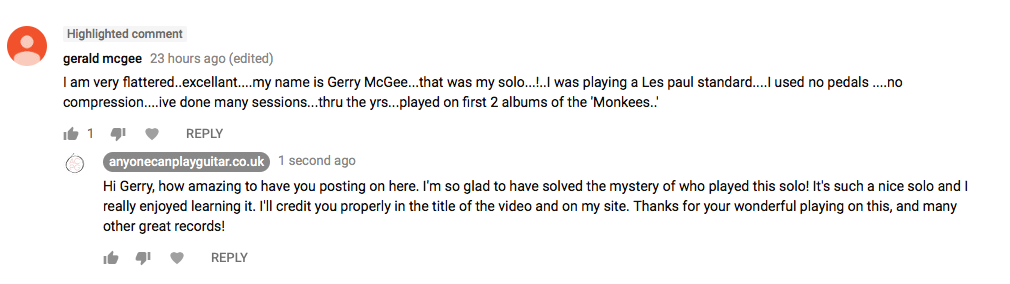
Brilliant!
The original recording sounds like this:
Here’s my lesson video:
Music + Tab
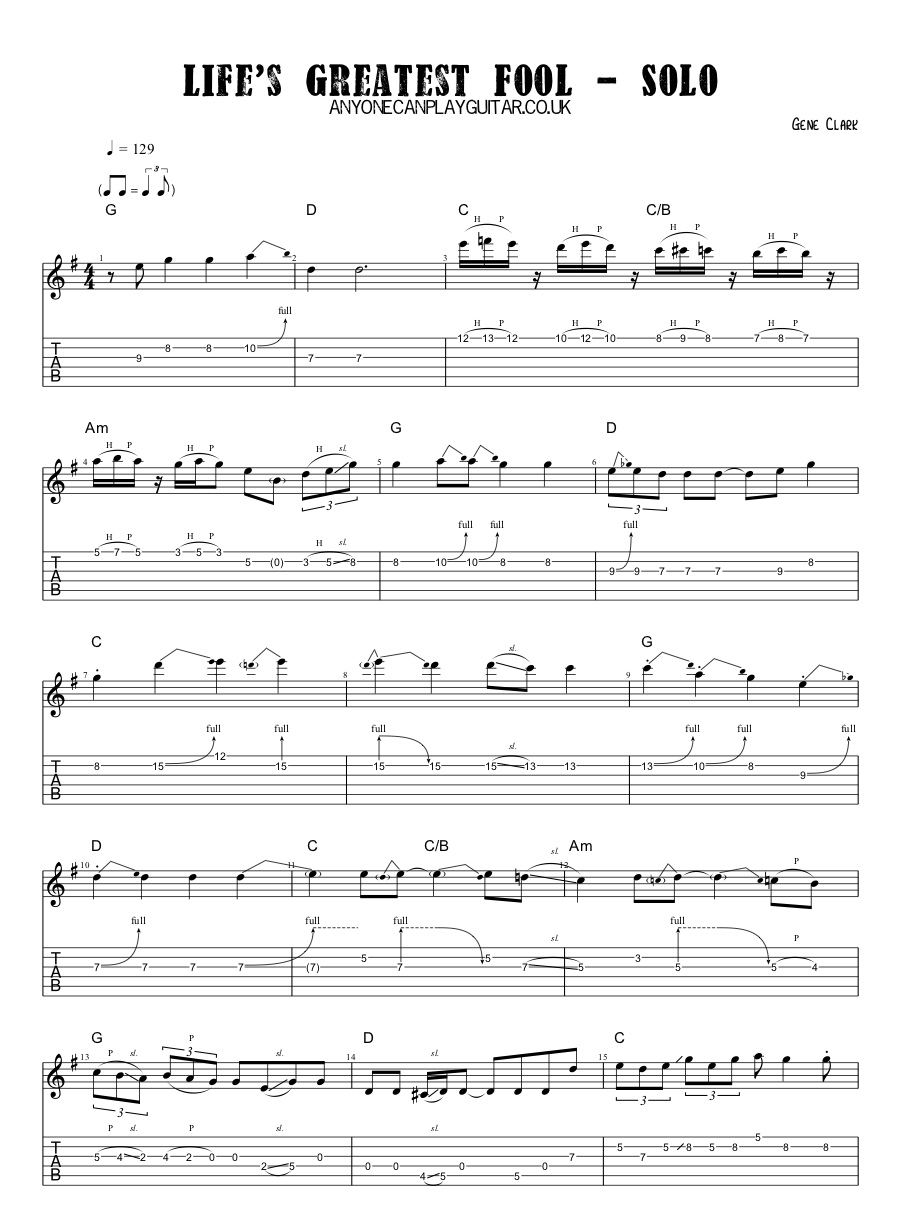
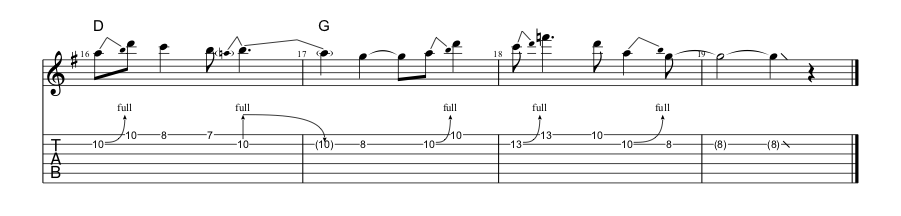
I’ve written the solo out for you below. The nuances are a bit hard to convey in notation, so be sure to listen carefully to the original.
Backing Track
I’ve made a custom backing track that I play over at the start of the video. It’s 3 minutes long so you can use it to practice the solo and to jam and improvise ideas of your own. If you’d like an mp3 copy of this as well as PDFs/Guitar Pro files of the tabs then check out my Patreon page.
If You Enjoyed This Lesson…
Maybe check out this lesson I did on country string bending, which covers a lot of the techniques used in the particular solo.
Another tasty little country-ish solo, this time from James Burton.
I Walk The Line by Johnny Cash
by Johnny Cash
In this lesson I show you how to play the Johnny Cash classic, mainly from the perspective of Luther Perkins great electric guitar part. There’s so much you can learn from this song: how to play rhythm guitar in the classic bass note/strum country style; how to connect chords with walk-ups and downs; the names of the I IV and V chords in 3 of the most common keys; how key changes work.
The lesson is based on the original and probably best-known 1956 recording of the song. Cash went on to re-record the song on a number of occasions and it’s interesting to check-out the differences between the various versions. The 1964 version is faster and there are some definite changes to the guitar part, particularly in the way Perkins walks up and down between chords. Also great is the live at San Quentin recording, but guitar on this is played by Carl Perkins (no relation) in a quite different more twangy style.
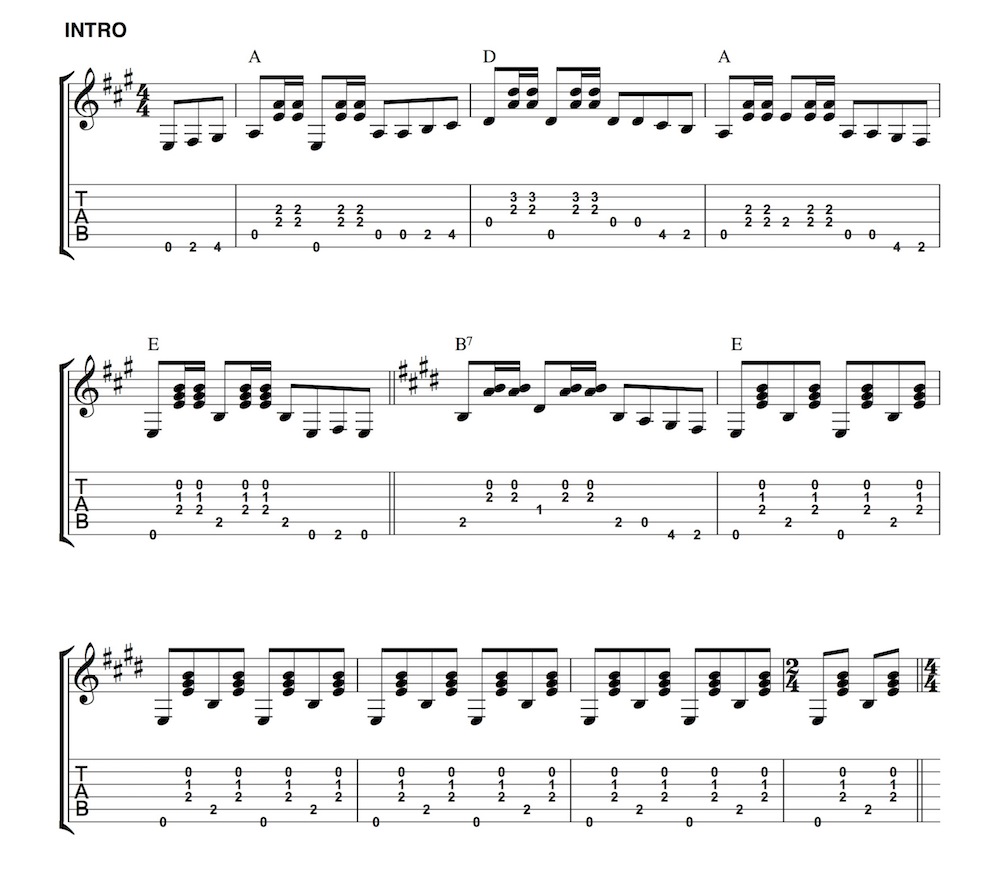
I’ve written out the intro below. I think it’s worth learning this intro note-for-note as Perkins plays it, since it’s such an iconic part. If you’d like a PDF of the entire song you can download it here. I suggest that for the verses you use the written part as a guide, and make it your own by varying the movement of the bass line and the right-hand strumming. As I explain in the video, it’s actually quite easy to make sense of the key changes if you think in terms of the movement of the I IV and V chords. Each verse has the same progression: V, I, V, I, IV, I, V, I. We start in E, walk up to A, walk up again to D, then walk back down to A, and finally back home to E again.