Here’s another great, pretty easy to play Joy Division song.
I’ve written out the music/tab below:

Online and private guitar tuition
Here’s another great, pretty easy to play Joy Division song.
I’ve written out the music/tab below:
Quite why I’ve never looked at a Joy Division song before I don’t know. Anyway, here’s a lesson on the classic She’s Lost Control. A great and easy to play song: one barre chord shape is all you need. The bass line is awesome too and works really well played on the guitar.
This is a famous 1979 TV performance of the song:
And here’s my video:
I’ve written out the riffs below. Download a high-quality PDF here. There’s really not much to it; if you know your barre chords then it’s pretty easy. But as I’m always saying, make sure you do the easy stuff really well: pay particular attention to the rhythm.

Following my look at She’s Lost Control, here’s another dose of post-punk genius from Joy Division. In this style of music attitude and ideas count for more than technique and guitar heroics, and Bernard Sumner’s guitar parts are easy play but perfectly formed. If you don’t already know it check out the original recording below, as well as a great live TV performance introduced by Tony Wilson.
And here’s my take on how to play it:
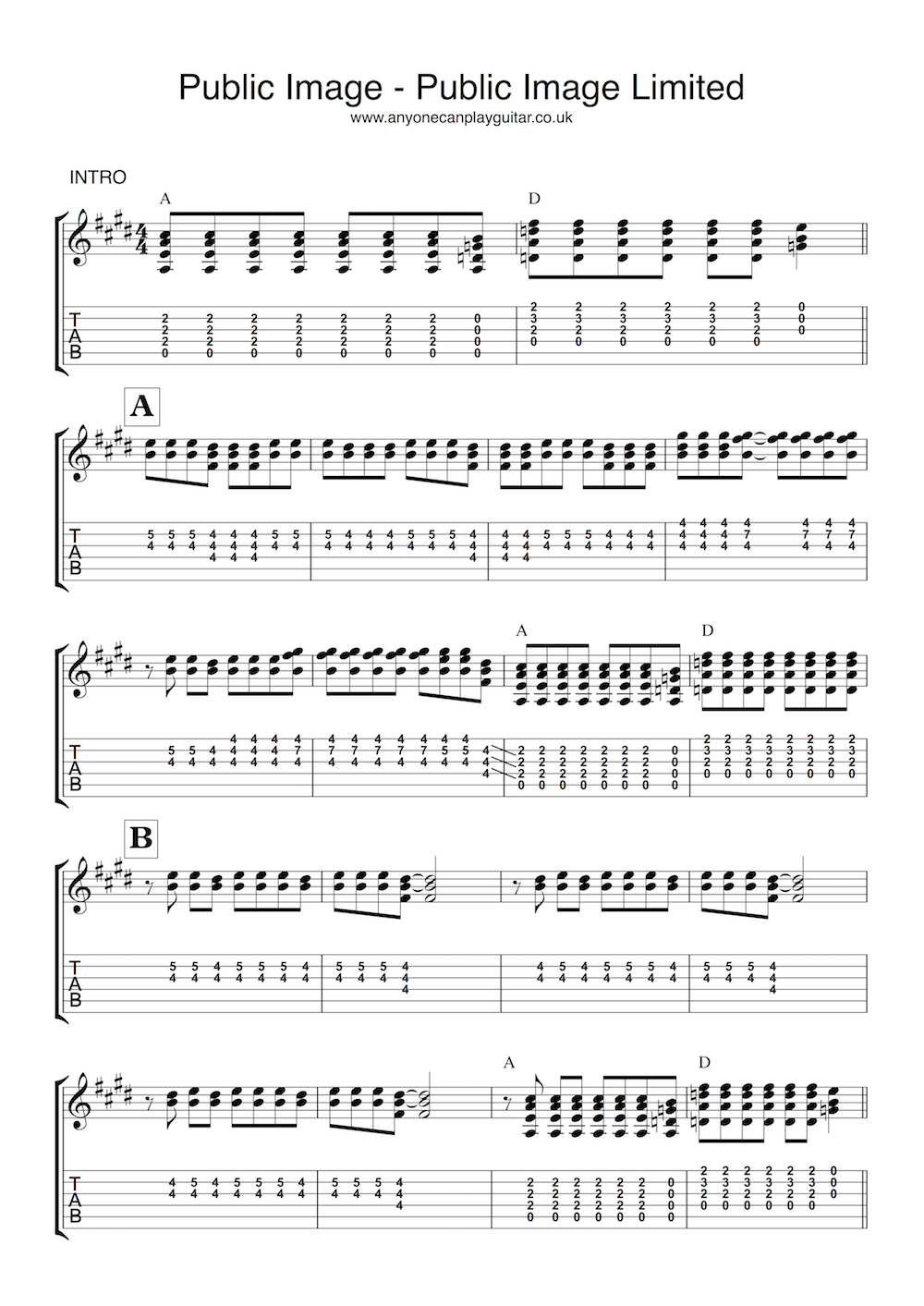
Find the music/tab below. If you’d like a high-quality PDF to download, click here.



This is what the album recording sounds like:
And this is the original single version:
It’s interesting to compare the two recordings. I think both of them are great in different ways, so it’s hard to say which I prefer. The single feels like more of a traditional punk recording: raw and to the point, power chords, no keyboards. The version on Real Life is more produced (with John Leckie twiddling the knobs, as he did years later for Magazine-lovers Radiohead on their album The Bends), the guitars are a bit more layered and jangly, and there are interesting keyboard textures from Dave Formula, who I don’t think was a member of the band at the time of the single recording.
I’ve written all the music out below. I’ve just given you the various parts for the different sections – listen to the recording and it should be easy enough to put everything together in the right structure. As I talk about in the video, there are some – mostly minor differences between the guitar parts on the two different recordings. The rhythm guitars on the single are all power chords – so just leave out the top 2 or 3 notes in the barre chords if you want to take this approach. The main riff is played exactly the same on each recording. The solo I’ve written out is the album version though the single version is very similar.


On a side note, I’ve become increasingly irritated with Sibelius, the software that I use to notate all my music. Maybe it’s great if you’re composing a symphony or scoring multiple parts for some complex ensemble but for anything beyond the most basic guitar-based notation it’s a right pain in the arse. Things which should be simple like unison bends or slides into or off of notes require much time-consuming faffing. The key signature is ignored when you’re pasting notes from the tab and you have to go in and manually fix all the notes. And you may as well forget about complex bending stuff like you find in country guitar solos. I’ve only stuck with it as it’s supposedly the most ‘pro’ and sophisticated notation software available. Think I’ll give Guitar Pro another try. [End of rant.]
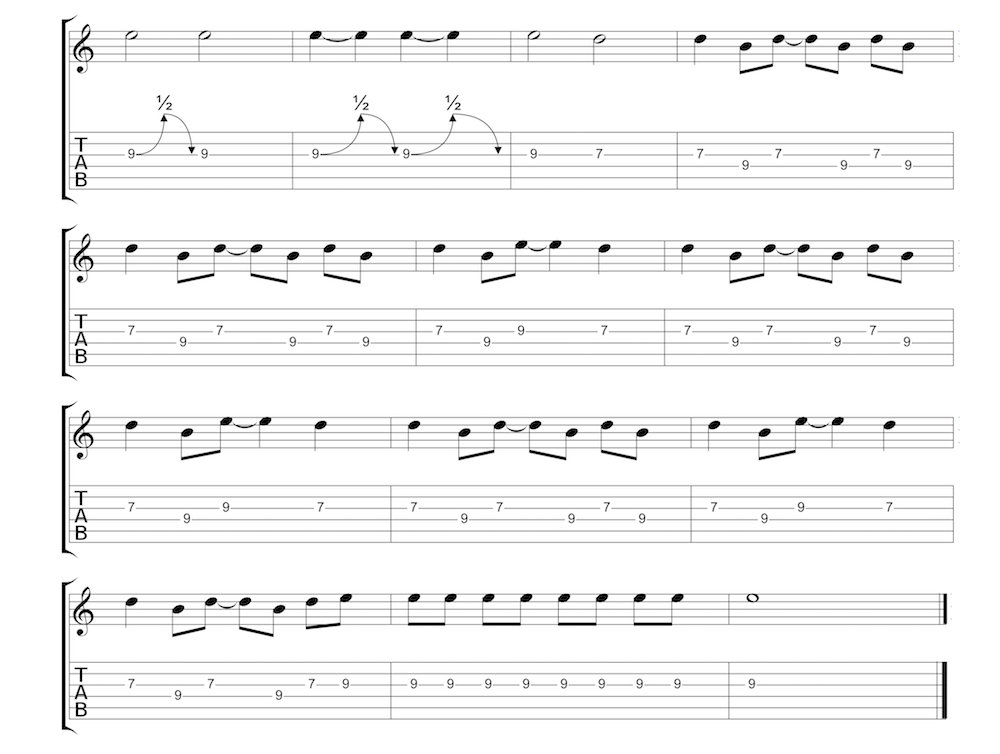
Here we have some more amazing playing from James Honeyman-Scott. As I say in the video, this song arguably contains one of the all-time great guitar solos: inventive, melodic and concise. For me, this kind of playing beats the bluesy-noodling approach to soloing nearly every time. And on top of the guitar genius of Honeyman-Scott, we also have a fantastic song with a great lyric (apparently written from the point of view of a prostitute addressing her child). There’s a lot happening on the original recording: layers of electric and acoustic guitar, alternate tunings, half-speed overdubs. I do my best to get to the bottom of how it’s all played in the video, but there are some things that are impossible to be 100% certain about. I decided to write the more complex intro and solo parts out in full, and then give you a basic chord/lyric chart for the rest of the song.
I’ve written out these two signature Honeyman-Scott parts out in full. The intro riff is a great, twangy melody based on the notes in the C major scale. The solo is in the key of E and you could think of it as being based around the E major and E major pentatonic scales. If you want to execute these parts as flawlessly as JH-S himself you’ll need to be super accurate with both your left and right hands. I’ve marked in how I would probably pick these parts, though there are other options you could try too.

This song works really well in a simple acoustic and vocal setting too (which is often said to be the test of a great song). Check out Chrissie Hynde’s unplugged performance below for a great example of how to approach this. [Update: sorry, looks like YouTube have taken down this video, will try and find another one soon.] If you just want to sing the song and strum along this is the way to go. The chord chart below outlines what’s going on. Here and on the original recording Chrissie keeps her part very simple, that way she can leave it to another guitarist or bass player to outline any more complex textures and harmonies.

